
Mementos, the new brand, would be aimed at addressing the need for boutique luxury hotels across various destinations.
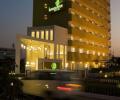
The mood at the Hotel Investment Conference South Asia (HICSA), the annual hospitality industry conference was rather upbeat. But hotel brand operators and owners remain cautiously optimistic of the outlook and are living on a hope that a third wave of the pandemic doesn't become a reality. Having just survived the unprecedented zero revenue situation, the two day confrence organised by consulting firm Hotelivate, was dotted with anecdotes and best practices adopted by the hotels of all hues.
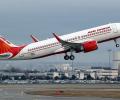
India's largest public sector bank State Bank of India (SBI) will support Tata group's bid for soon-to-be-privatised Air India by subscribing to Tata Sons debentures or funding the special purpose vehicle (SPV) set up by Tata Sons for the acquisition. Bankers said the credit rating of Tata group's holding company is "AAA" signifying high safety and a combination of Air India with its existing airline businesses would make it a formidable player - leading to a duopoly market with IndiGo. It would also open many business opportunities, including in the retail segment, an official said.
Vindhya Telelinks, Universal Cables and Birla Cable shareholders go against family's wishes.

Besides their country of origin, General Motors, Ford Motor and Harley-Davidson have another trait in common: all three have failed in India, the world's fifth largest automobile market. All three of them took a tough call to de-prioritise India as a market amid disruption from heightened regulations and sharper focus on capital allocation by the parent.

First-time buyers of cars and sport utility vehicles (SUVs) have made a comeback, shows last year's data from top passenger vehicle (PV) makers. If the trend persists, it may move the needle on the overall car penetration ratio. India's car penetration ratio is 32 per 1,000 people - one of the lowest, compared to mature car markets like the US and Europe.
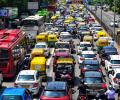
If the court order is implemented, it will lead to an increase in the insurance outgo for car owners by a minimum Rs 50,000 for car and a minimum of Rs 7,000 for two-wheeler owners.

For automakers, the festive season is about raking it in through ramped up sales and attractive consumer offers. However, despite the robust demand, what may spoil the party this year is a global shortage of semiconductors.

For Mahindra & Mahindra (M&M), which has just started executing a comeback strategy for wresting back ground it lost to rivals, this could not have come at a worse time. The maker of the Bolero Neo and the Thar models on Thursday said it would have to halt production at its automotive plant for a week due to the worsening supply situation of semiconductors.
In a rare face off, captains of the auto industry have hit out at the government for not walking the talk. At an industry event in the capital on Wednesday, R C Bhargava, chairman of India's largest carmaker Maruti Suzuki, and Venu Srinivasan, chairman of TVS Motor, questioned the government's intent to support the auto sector. Revenue secretary Tarun Bajaj sat in the audience listening, before his turn came to counter them.
Union Minister of Commerce and Textiles Piyush Goyal has stirred up a hornet's nest by taking on India Inc, specifically the Tata group, which is among the companies that lobbied against the Modi government's pro-consumer draft e-commerce policies. While Goyal's comments, made at a Confederation of Indian Industry (CII) event, were streamed live on YouTube, the industry lobbying body later edited the video and subsequently withdrew the entire speech. Goyal had said the Tata group and other Indian companies often lobbied for their interest, while ignoring national interest.

One of Mumbai's biggest real estate redevelopment projects of Bombay Development Directorate's (BDD's) chawls (large buildings divided into many separate tenements, offering cheap, basic accommodation) has taken off in Central Mumbai, opening up a Rs 20,000-crore opportunity for real estate companies. It is expected to drive down real estate prices in Central Mumbai by up to 25 per cent, forecast real estate experts. Spread over 92 acres in Central Mumbai's prime localities of Worli, Lower Parel, and Dadar and consisting 195 four-storey houses, the BDD chawls were constructed in the 1920s.

After the hit of the pandemic, India Inc is now worried about the adverse impact of inflation and higher commodity prices on their revenues and margins. The inflation scare is the strongest among manufacturers of consumer goods such as automobiles, consumer durables, and fast-moving capital goods (FMCG). Companies across sectors fear they will not be able to pass on the hike in input costs to their consumers due to weak demand, which, in turn, would lead to a hit on margins and profitability in the forthcoming quarters.

SoftBank-backed Ola Electric took the wraps off its maiden e-scooter offerings -- Ola S1 and S1 Pro -- for a commercial launch on Sunday. With prices starting from Rs 99,999 (excluding state government incentives, registration fee, and insurance cost), the Bhavesh Aggarwal-founded firm said the e-scooters are designed and engineered in India for the world and will deliver the best scooter experience to the consumer. He suggested that after 2025, sale of petrol-powered two-wheelers should not be allowed.
The Tata group is looking to make a foray into semiconductor (also known as chips) manufacturing and it has set up a business to seize the opportunity, Chairman N Chandrasekaran said on Monday. "At the Tata group, we have already pivoted into a number of new businesses like electronics manufacturing, 5G network equipment as well as semiconductors, in all probability," he said while speaking at the annual general meeting of the IMC Chamber of Commerce and Industry. Chandrasekaran said global supply chains, currently heavily dependent on China, would see a big change in a post-pandemic world with businesses shifting their reliance to other countries.

For the fiscal ended 2021, the group has made a loss of Rs 5,943 crore on sales of Rs 11,723 crore, a drop of 66 per cent over fiscal 2020. The group's total debt was up by 7 per cent to Rs 20,742 crore.

Mumbai, India's financial capital, is set for a mega transformation with a massive patch of land opening up for redevelopment; a new metro railway ready to start services by the year-end; and the country's oldest railway station, the Chhatrapati Shivaji Terminus, going for modernisation with private sector participation. Work on Mumbai's second airport will start from next month, while construction of the sea link connecting central Mumbai to Navi Mumbai has already moved into a fast lane despite Covid-induced lockdowns. Also, a coastal road project, connecting Nariman Point to Worli, is under way and will help decongest the city to quite an extent. Of all these mega infrastructure projects, the one that has a huge potential to change the city's skyline is the Eastern Waterfront project - to be built on the Mumbai Port Trust (MbPT) land.

The Essel group founder, Subhash Chandra has settled 91.2 per cent of his debt with 43 lenders, and the remaining dues are in the process of being paid. "I am happy to report that we have come out of the financial stress situation by settling 91.2% of our total debt to 43 lenders in 110 accounts. "About 88.3% of the amount has been paid, while the remaining 2.9% is in the process of being paid. "We are making all the required efforts to settle the remaining 8.8% of our total debt.

Dubai-based billionaire BR Shetty has sued Bank of Baroda (BoB) and audit firm Ernst & Young (EY) in a New York court, accusing them of ignoring fictitious and fraudulent transactions that resulted in NMC Healthcare going bankrupt. Shetty is seeking $8 billion in damages in the suit that also names the top management of NMC Healthcare, and Netherlands-based Credit Europe Bank. A top NMC Healthcare official confirmed the development to Business Standard and said despite several meetings, senior BoB officials in India did not take remedial steps for fear of getting involved in an international ponzi scheme perpetrated by then senior management officials.
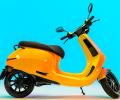
The entry of SoftBank-backed Ola into the electric scooter (e-scooter) segment is set to power up the overall market and perhaps fast-track the adoption of battery-operated vehicles. But for manufacturers of internal combustion engine (ICE)-powered two-wheelers, such as Bajaj Auto, Hero MotoCorp, and TVS Motor, it will be a double whammy. Not only will they have to contend with the aggressive pricing of Ola's scooter and incur a loss at each unit of the e-scooter sold, the volumes of their regular (ICE) models, too, could feel the squeeze, observed analysts. Ola is expected to price its e-scooter in the range of Rs 85,000-1.1 lakh.
 © 2026 Rediff.com - Investor Information - Advertise with us - Disclaimer - Privacy Policy - Sitemap - Feedback - About us - Terms of use - Grievances